
Introducing Your Puppy to His/Her New Crate
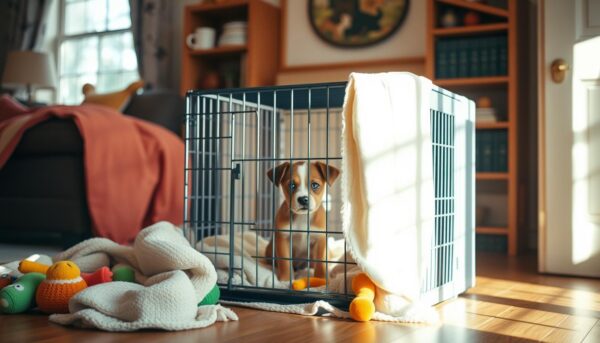
Crate training fast-tracks housebreaking and creates a predictable, safe den your puppy will choose — making life easier for your family and giving your dog a reliable personal space in the home. Introducing your puppy to a crate takes a little planning and patience: start by choosing a dog crate that allows them to stand, turn, and lie down comfortably — not so big that one end becomes a bathroom, and not so small that they can’t move.
Quick measuring example: measure your puppy from nose to base of tail, then add 2–4 inches (or use an adjustable divider in a larger crate so usable space grows as your puppy does).
Key Takeaways:
- Crate training helps with housebreaking and gives your puppy a consistent, safe space in the home.
- Pick the right crate size so your puppy can stand, turn, and lie down comfortably; consider a divider for growing pups.
- Use short, positive sessions with treats and meals to build a love for the crate and encourage calm behavior inside crate time.
- Gradually increase the length of time your puppy spends in the crate while creating positive associations so the crate becomes a comforting place.
- Small upgrades like a secure floor grid can improve hygiene and comfort in certain crate types — see below for details.
Download a printable crate-size checklist — a handy way to pick the right crate and plan short daily crate sessions.
The Importance of Proper Crate Introduction
Proper crate introduction gives your puppy a predictable, cozy spot in the home and speeds up house-training when you do it right. Introduce the crate as a den-like refuge rather than a punishment so your puppy forms positive associations that last a lifetime. A calm, consistent approach helps your dog accept the crate as their safe space and supports better daily routines.
Crate Training as a Housebreaking Tool
Crate training is a reliable way to help housebreak most puppies because many dogs naturally avoid soiling their sleeping area. Use the crate to teach a consistent schedule: take your puppy out for potty breaks after meals, play sessions, naps, and first thing in the morning. Short, predictable routines reduce accidents and teach your puppy to wait for access to a potty area.
Keep sessions positive and reward calm behavior: feed food and meals inside the crate, drop high-value treats near or inside the open crate to encourage exploration, and praise quiet, relaxed behavior. These steps make the dog crate a comfortable place your puppy will choose on their own.
Choosing the Right Crate Size
Pick a crate large enough for your puppy to stand, turn, and lie down comfortably but not so big that they can create a separate potty area. Practical sizing quick-check:
Sizing quick-check (click to expand)
- Measure your puppy from nose to base of tail.
- Add 2–4 inches to that measurement for growing pups.
- If you prefer one larger crate, use an adjustable divider so the usable space grows with your puppy.
Example: small-breed puppies often fit a medium crate with a divider through the first several months; adjust as they grow.
Make sure crate construction is safe and well-ventilated — no sharp edges, secure latches, and sturdy materials. For wire kennels or raised-floor models, consider adding a floor grid when appropriate: a grid can lift bedding off the crate bottom, improve airflow, and keep bedding drier after accidents. If you use a floor grid, always cover it with a crate-safe pad or tightly fitted mat so your puppy lies on a comfortable surface and to help prevent paw entrapment.
Match the crate or divider choice to your puppy’s current size and anticipated adult size. If you need more guidance, download our sizing chart or consult a certified trainer for breed-specific recommendations.
Watch this demonstration for a step-by-step intro:
Creating a Cozy and Comfortable Crate Environment
Getting your puppy used to the crate is a key step — make it a safe, comfortable spot so your puppy chooses it as a restful, den-like area. A welcoming crate lowers anxiety and builds positive associations that make crate training easier and more reliable over time.
Rotating Toys and Enrichment
Begin with a washable, chew-resistant bed or blanket and rotate two or three safe toys every few days to keep novelty high. Offer a mix of chew toys, a supervised treat puzzle, and one durable stuffed toy (avoid small or easily shredded items that can become choking hazards). For short supervised sessions, a frozen Kong or treat-filled puzzle is an excellent way to encourage calm, independent time inside the crate.
- What to put in the crate: a washable, non-slip bed or pad; one safe chew toy; one puzzle/treat toy for occasional enrichment; and a snug blanket for warmth.
- Water and food: feed meals inside the crate to create positive associations; follow your veterinarian’s advice about overnight water to reduce nighttime accidents.
- Safety first: make sure toys are size-appropriate, inspect bedding for loose threads, and never leave puppies with small or shred able items unsupervised.
Small environment changes can make a big difference. Try low-volume calming music, a pheromone diffuser designed for dogs (check age recommendations with your veterinarian), or a short-scented blanket that smells like the household — these help lower stress during crate transitions.
Floor grid guidance: if you use a wire or raised dog crate, a floor grid can be a useful upgrade — it keeps bedding off the crate’s bottom, improves airflow, and helps keep bedding drier after accidents. Always cover the grid with a crate-safe pad or tightly-fitted mat so your puppy lies on a comfortable surface and to prevent paw entrapment; choose a grid that fits your dog crate model and inspect it regularly for sharp edges.
“A comfortable, familiar crate can be a safe haven for your puppy, providing a sense of security and helping them feel at ease during the training process.”
Setups by puppy stage (click to expand)
8–12 weeks (teething): prioritize durable chews and short, supervised frozen-Kong sessions to encourage calm inside crate time.
4–6 months: introduce more stationary enrichment like puzzle feeders and gradually increase the length of crate sessions as your puppy can sit quietly.
Tailor the amount of bedding and enrichment to your puppy’s chewing tendencies and comfort level; some puppies may need firmer bedding or fewer plush toys during heavy teething.
Download a printable crate-setup checklist for bedding, toy rotation, and floor-grid compatibility tips.
Introducing Your Puppy to His/her New Crate
Establishing Positive Associations
Crate training is a key part of your puppy’s development. The goal is to make the crate a calm, positive place so your puppy chooses it for rest and security rather than seeing it as punishment. Use gentle, consistent steps and reward calm behavior to build trust and healthy crate associations.
- Step 1 — Let them explore: Put the crate in a busy part of the home (living room or kitchen) during the day so your puppy sees family activity and feels included. Leave the door open, add soft bedding and a few safe toys, and scatter a few treats near the entrance to encourage curiosity.
- Step 2 — Build positive habits with meals and treats: Feed short meals or tasty treats inside the crate to make being inside crate a good thing. Start by placing the bowl near the open crate, then progressively move it deeper so your puppy eats with the door open. This creates a strong food-based association with the crate.
- Step 3 — Practice closing the door in short increments: Once your puppy enters willingly, close the door for very short periods — start with 5–10 minutes while you sit nearby. If the puppy sits quietly, open the door and reward them. Increase closed-door time slowly in 5–10 minute steps as they tolerate it. If your puppy cries, reopen the door and try again a few minutes later; never force them inside.
- Step 4 — Crate at night and when you leave: Move to nighttime crate use once your puppy is comfortable with short closed-door sessions. Many owners place the crate near the bedroom for the first few nights so the puppy hears household sounds. Remember puppy age limits for length time in a crate (see FAQ and consult your veterinarian for breed-specific guidance).
Floor grid tip: if you use a wire or elevated dog crate, consider a floor grid to lift bedding off the base and keep it drier after accidents. Always cover the grid with a crate-safe pad or tightly fitted mat so your puppy lies on a comfortable surface and to help prevent paw entrapment; choose a grid designed to fit your dog crate model and check it regularly for sharp edges.
Short-session reminders: use short periods initially, be consistent each day, and watch body language — when your puppy can sit quietly for brief closed-door sessions, you can extend the intervals. If separation anxiety is a concern, proceed slowly and consult a certified trainer or veterinarian behaviorist if your puppy cries persistently.
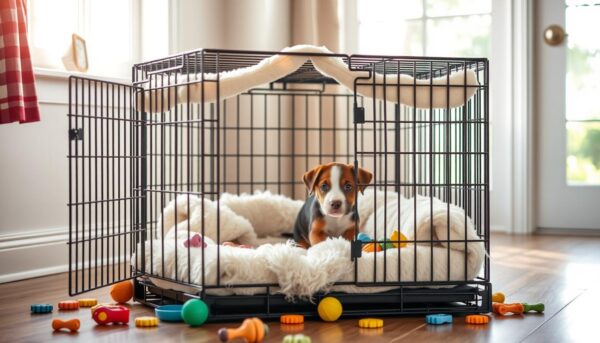
Example setup for early crate sessions — bedding, a chew toy, and a treat puzzle help encourage calm time inside the crate.
“The key to successful crate training is to make the crate a positive experience for your puppy, not a place of punishment or confinement.”
Create a simple daily schedule that fits your routine — short supervised crate sessions throughout the day, meals in the crate, and a plan for overnight use. For step-by-step schedule templates and printable routines, download our Crate Training Schedule).
Conclusion
Bringing a new puppy home is wonderful. A calm, positive introduction to the crate sets the tone for good house manners and gives your puppy a secure place they’ll choose for rest. Take your time, use positive reinforcement, and tailor the process to your puppy’s age and temperament — a thoughtful approach helps create a well-adjusted dog and fewer accidents around the house.
Quick action checklist:
- Crate size: measure nose-to-tail and add a few inches, or use a divider so the dog crate grows with your puppy.
- Bedding & comfort: choose washable, chew-resistant bedding and rotate a couple of safe toys for enrichment.
- Floor grid: consider a floor grid for wire crates to keep bedding drier — always cover it with a crate-safe pad to prevent paw entrapment and add comfort.
- Short sessions: start with short closed-door times (5–10 minutes), gradually increase as your puppy can sit quietly; feed meals inside the crate to build positive associations.
- Consistency: follow a predictable daily schedule of crate time, potty breaks, and supervised play to speed house-training and reduce anxiety.
Want hands-on help? Download the printable checklist or sign up for our free crate-training email series to get sample schedules by age and simple daily steps (no phone number required).